
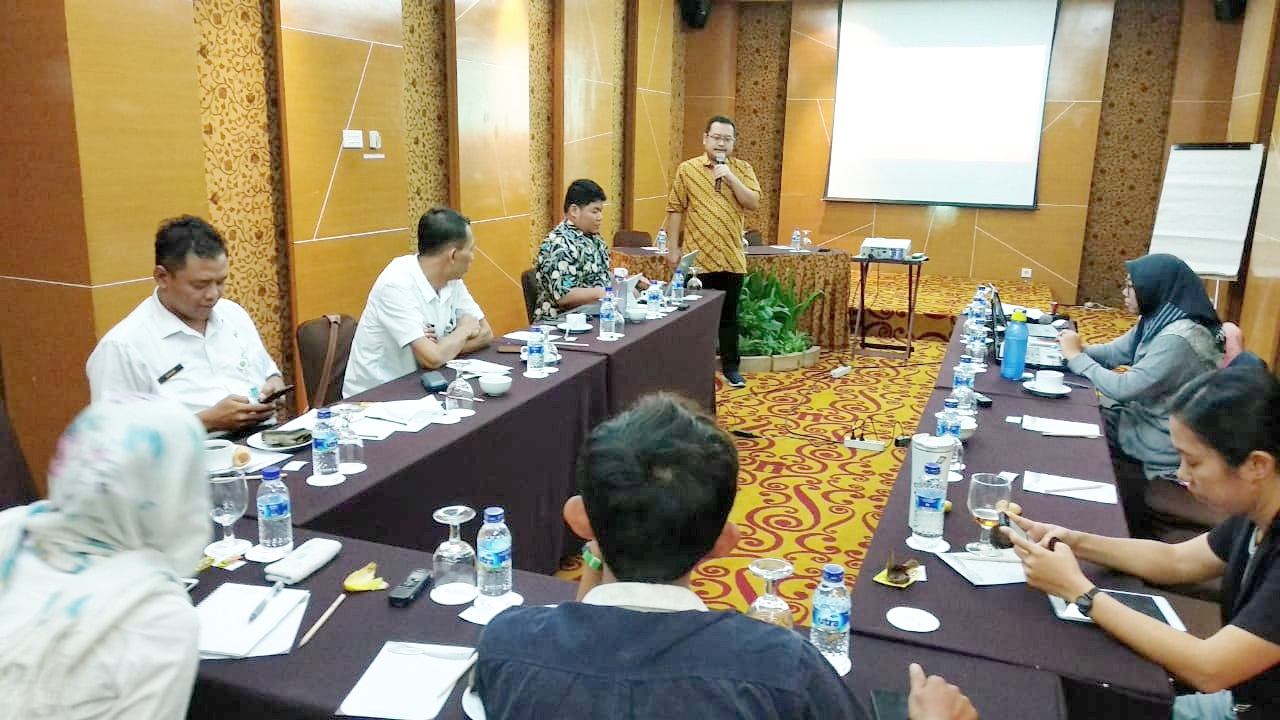

Bantul – IDEA together with CRPG, AMRTA, and Pattiro Semarang held a Focus Group Discussion (FGD), Wednesday (04/09) at Ros In Hotel, Bantul. The FGD which discussed Transparency of Information related to Procurement and Performance of the Water Sector, directly involved the Regional Drinking Water Company (PDAM), the Regional Development Planning Agency (Bappeda), and the Public Works, Housing and Settlement Areas Agency (PU PKP) of Bantul Regency.
Also present at the FGD were the Regional Management Board of the Indonesian Drinking Water Company Association (Perpamsi) DIY, the DIY Environmental Forum and vendors involved in providing clean water in Bantul district.
This FGD is one of the activities of the open contracting sector water program supported by Hivos Southeast Asia. There are many objectives of this FGD, some of which are to identify and validate potential or existing water governance problems due to procurement and contract arrangements, identify relevant stakeholders, their interest in open contracts and their capacity, and assess the extent to which water contracts and documents are disclosed.
In addition, this FGD also assessed how open contracts can improve the situation, identify and assess the stages needed to implement the principles of open contracts, and identify challenges and obstacles in implementing Open Contracts.
Fulfillment of water as mandated in the 1945 Constitution is still one of the problems faced by the government today. Until now, the coverage of clean water services in Indonesia is only around 71 percent. The government itself is targeting the entire population to be served by clean water by 2022.
In addition to being faced with the problem of low service coverage, the government is also still facing the problem of low capacity of implementation both in terms of funding and institutions. Of the 391 Indonesian drinking water companies (PDAM) only 57% are considered healthy, the rest are sick due to debt. Lack of good governance causes this condition to occur.
Open contracting becomes relevant in this case because transparent public procurement helps to improve public monitoring and oversight. If Open Contracting can be implemented stakeholders can have a kind of early warning system through detection of corruption threats. In addition, public oversight can contribute to a more efficient procurement system.
Editor: AH
 English
 Bahasa Indonesia