

The absence of an effective mechanism for handling public complaints for poverty alleviation programs causes public complaints to only be handled on a case-by-case basis and not resolved systematically, so that the same problems always recur. For example, currently there are still wrong targets for beneficiaries of poverty alleviation programs. On the other hand, the community itself has tried to supervise poverty alleviation programs.
However, the monitoring process has not fully improved the success of the poverty alleviation program. Previously, IDEA together with the community of residents from the Regency/City in DIY in the activity "Workshop on Social Audit of Poverty Alleviation Program in DIY" agreed to initiate a social audit of the poverty alleviation program in DIY.
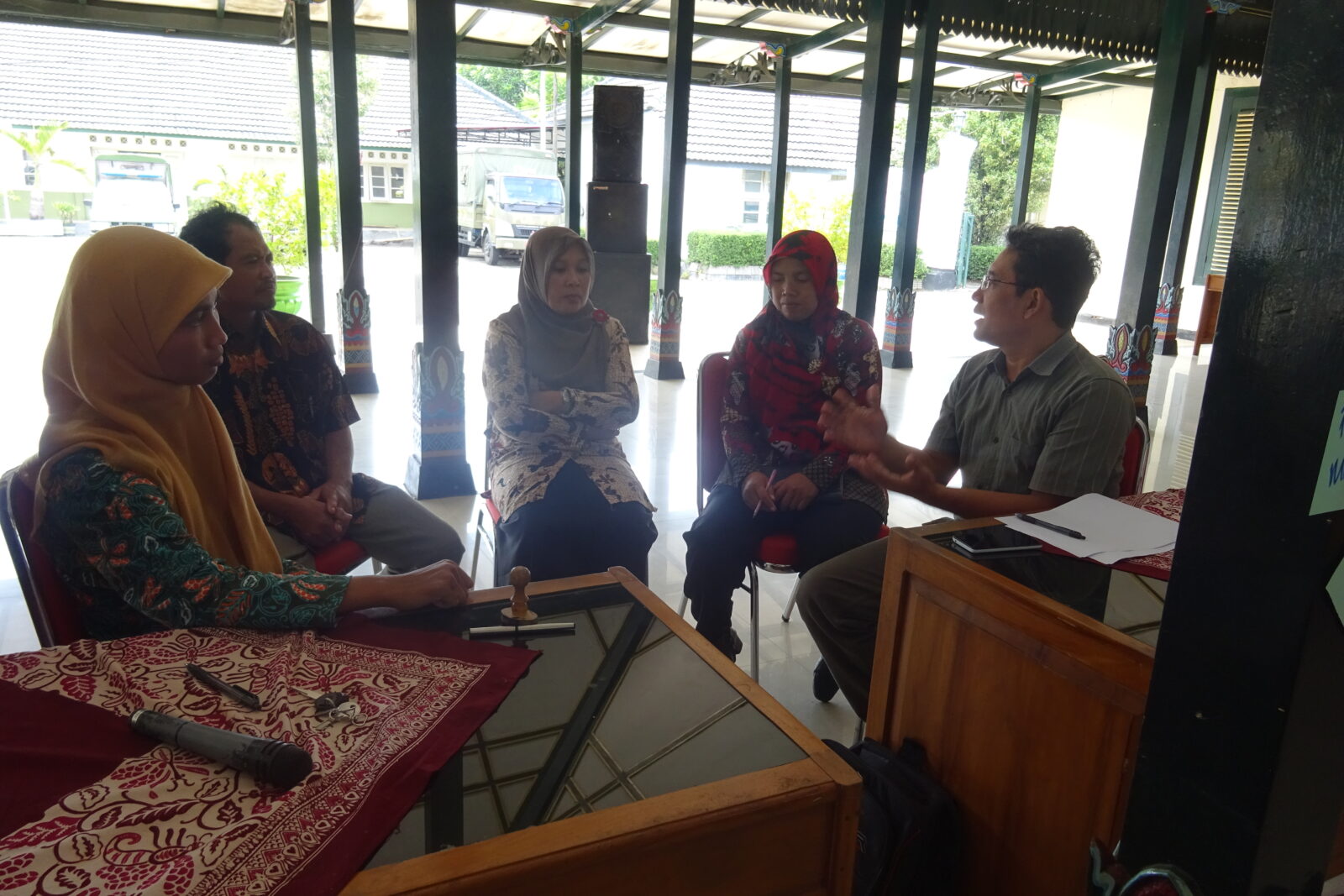
As a follow-up to the process, on June 23, 2016, IDEA conducted a Focus Group Discussion (FGD) on the Social Audit of the Poverty Alleviation Program in Gunungkidul Regency. The community of residents from Gunungkidul Regency agreed to conduct a social audit for the Social Protection Card (KPS) program in Gunungkidul. The issuance of KPS by the government is one of the efforts to ensure the accuracy of the targets of social protection programs. The KPS is then used by its owner to obtain social protection programs including the Raskin Program, Poor Student Assistance (BSM) and Temporary Direct Community Assistance (BLSM).
"In practice, the distribution of Social Protection Cards (KPS) which since 2015 has changed its name to the Prosperous Family Card (KKS) still results in inaccurate recipient targets. For example, approximately 400 cards that we will later return to the center," said Suyatmiyatun as a resource person from the Gunungkidul Social and Manpower Office. Recipient data that still refers to the 2011 PPLS is the cause of the inaccuracy in targeting recipients of the card.
In the third session, facilitator Hernindya Wisnu Aji said, “Government programs are a return and obligation from the state for the taxes we pay. This basic common sense logic is what builds common sense for social audits.” At the end of the session, the conclusions obtained by participants included that hamlet heads are always the target of complaints from residents if there are problems in the implementation of poverty alleviation programs. Second, the renewal of data references from PPLS 2011 to PBDT 2015 has not yet had an impact on the community. Third, the distribution of the Prosperous Family Card has instead caused a new problem, namely the occurrence of “chaos” between residents who received and those who did not receive the card.
As a follow-up, after completing a series of social audit discussions in the Regencies and Cities in DIY, IDEA will formulate the results of the social audit discussions with representatives from each region to then be presented to the DIY Government and DIY DPRD to encourage improvements in the governance of poverty alleviation programs. (GP)
 English
 Bahasa Indonesia