

Corruption cases in Indonesia are increasingly concerning every year. The state losses due to corruption are unimaginable. According to data from Indonesia Corruption Watch, in 2018 alone, the state lost 9.29 trillion due to corruption cases. Of the many corruption cases, the sector that contributes the most to corruption is the procurement of goods/services. Based on data released by the Corruption Eradication Commission, 80% of corruption cases come from the procurement of goods/services.
Corruption cases in PBJ have eroded almost the entire procurement process, from procurement planning, procurement preparation, to the implementation of the selection. The modes are also diverse, ranging from bribery to arrange the tender winner, collusion between providers and tender committees, budget markups and markdowns, discrimination of terms and criteria to providers, to changing specifications during implementation.
The government's strategy to reduce the level of corruption in procurement of goods/services is quite good, for example by establishing regulations for electronic procurement of goods/services(e-procurement). However, this strategy is not without loopholes, because the modes of corruption have also developed. Therefore, monitoring procurement projects that are prone to corruption is a strategic choice to be carried out, not only by the Government Procurement Policy Agency (LKPP) and other state supervisory institutions, but also by civil society.
As an effort to carry out this monitoring, IDEA together with ICW and a coalition of civil society in Yogyakarta as well as print and online media journalists are trying to monitor the procurement of goods/services in the construction of the riskiest projects in the Special Region of Yogyakarta (DIY) and the 5th riskiest in Indonesia.
This Monitoring Program is carried out to ensure that procurement processes in the DIY government environment are running effectively, efficiently, transparently and accountably. Furthermore, this program also encourages the DIY government to implement the principles of public information transparency in providing information on procurement of goods/services.
In its implementation in DIY, several civil society organizations involved in the coalition include the Indonesia Court Monitoring (ICM) Center for Anti-Corruption Studies (Pukat) UGM, the Indonesian Legal Aid Association (PBHI), the Yogyakarta Legal Aid Institute (LBH), Yasanti. Meanwhile, the journalists who collaborated in this Monitoring were journalists from Kompas, Gatra and Harian Jogja.
Collaboration between civil society organizations and journalists is carried out so that journalistic work and data analysis run together. Thus, the output produced is also more credible and can be published to the wider public.
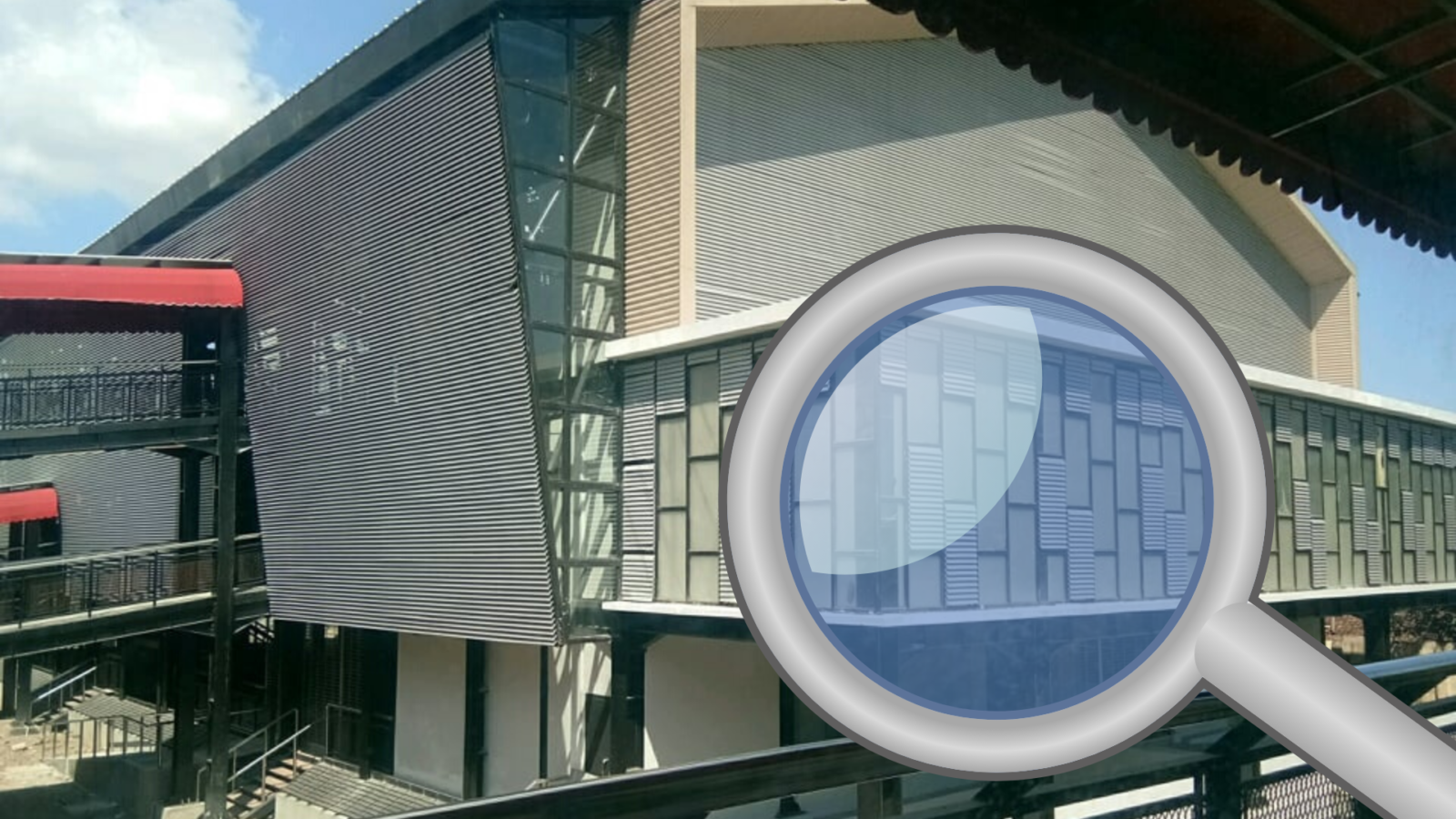
The case study in this investigation and monitoring program is the construction of a PKL relocation site at the former Indra Cinema. The selection of the case study began with findings from the opentender.net site. The findings on the site stated that the PKL relocation site construction project at the former Indra Cinema was included in the category of the riskiest projects, both nationally and in the Special Region of Yogyakarta. Nationally, this project is ranked 8th as the riskiest project. Meanwhile, in the Special Region of Yogyakarta, according to the site, this project is even ranked 1st as the riskiest project.
The opentender.net site is a site developed by the Indonesian Corruption Watch (ICW) which one of its functions is to provide instruments for supervisory institutions/interested parties to find potential violations in thee-proc process. In addition, the opentender.net site can also be a tool to identify and confirm opportunities for irregularities in the electronic procurement of goods and services.
The determination of the PKL relocation project at the former Indra Cinema as the riskiest project was assessed by opentender.net based on several indicators. Among others, related to the high contract value and low participation of tender participants involved in phase I of the construction.
The construction of the PKL relocation site at the former Indra Cinema is a project built in the former Indra Cinema building in order to organize the Malioboro pedestrian area. The arrangement of the area was carried out as part of the Strategic Space Unit Utilization program of the Philosophy Axis, which is symmetrical from the direction of the Tugu Pal Putih to the Krapyak stage. The source of funding for the project is the Special Fund (Danais) of the Special Region of Yogyakarta (DIY). Danais DIY is a fund originating from the State Treasury Budget Section which is allocated to fund the Special Authority as mandated in Law no. 13 of 2012 concerning the Special Authority of DIY.
The total amount of funds allocated for the construction of the former Indra cinema project is Rp 62,200,000,000. Each for the construction of phase 1 in 2018 amounting to Rp. 44,100,000,000, construction of phase 2 in 2018 amounting to Rp. 15,100,000,000, and construction of phase 3 in 2019 amounting to Rp. 3,000,000,000.
Method Monitoring
In the process of tracing data and information, the coalition of civil society and journalists carried out, among other things, literature studies, hearings, interviews and document tracking.
Literature studies are conducted by reviewing available data and information, including data from LPSE, mass media news information, and regulations and laws related to the procurement of goods/services.
Meanwhile, the Audience was conducted through a meeting forum with parties such as the DIY Public Works, Housing and Energy and Mineral Resources Service as the Commitment Making Officer (PPK) of the DIY Procurement Service Unit (ULP) along with the Group (Pokja) as the tender committee/implementer.
The Civil Society and Journalist Coalition also conducted interviews with several parties such as the affected PKL Group, heirs of the former Cinema land and building and construction experts. Meanwhile, document tracking was carried out by collecting complementary evidence such as the Regional Apparatus Organization work plan document and the PPK Budget Implementation Document, Offer Document, Evaluation Document, Project contract document, and PTUN and Supreme Court decisions related to land acquisition.
Monitoring Findings
During the Monitoring process, there were several findings that were successfully obtained by the civil society and journalist coalition. Some of them are:
- There is an alleged violation of procurement provisions in the first phase of the auction for the construction of the relocation site at the former Indra cinema, which chose a fast tender on building specifications that were not simple. The provisions allegedly violated in this case are Presidential Regulation 4 of 2015 concerning the Fourth Amendment to Presidential Regulation Number 54 of 2010 concerning Government Procurement of Goods/Services.
- There are allegations of collusion that caused unfair business competition in the tender stages II and III which were won by two different companies with the same owner, which violates the provisions of Law No. 20 of 2008.
- There are allegations of violations of the law by the DIY Regional Government which built a street vendor relocation project on disputed land, resulting in state losses due to the error in providing compensation at a cost of Rp. 18,000,000,000.
- The public cannot access contract documents and procurement documents for the construction of the PKL relocation site at the former Indra Cinema, even though in the KIP Law these documents are included in public information and are strengthened by Governor Regulation No. 52 of 2018 concerning guidelines for managing public information which states that auction announcement information is included in public information that is published periodically.
Meanwhile, collaboration with journalists also produced several important findings as published by each media such as Kompas, Gatra and Harian Jogja. Here are the publication links
- https://jogjapolitan.harianjogja.com/read/2019/11/20/510/1025167/eks-bioskop-indra-catatan-merah-lelang-proyek-pusat-pkl-malioboro
- https://jogjapolitan.harianjogja.com/read/2019/11/21/510/1025265/eks-bioskop-indra-aroma-monopoli-dalam-proyek-relokasi-pkl
- https://jogjapolitan.harianjogja.com/read/2019/11/22/510/1025356/eks-bioskop-indra-dokumen-lelang-ditutup-rapat
- https://jogjapolitan.harianjogja.com/read/2019/11/23/510/1025461/eks-bioskop-indra-rawan-rasuah-di-lahan-sengketa
- https://bebas.kompas.id/baca/utama/2019/11/20/sengkarut-relokasi-pkl-malioboro-1-bau-tak-sedap-lelang-cepat-di-sebelah-istana/
- https://bebas.kompas.id/baca/utama/2019/11/21/kisut-temuan-bpk-dan-dugaan-monopoli-proyek-relokasi-pkl-malioboro
- https://bebas.kompas.id/baca/utama/2019/11/22/sengkarut-masalah-tempat-relokasi-pkl-malioboro-3
- https://www.gatra.com/detail/news/457636?
- https://www.gatra.com/detail/news/457874?
- https://www.gatra.com/detail/news/458091/hukum/sentra-pkl-malioboro-tender-cepat-rp44-m-salah-tempat?
Contributor: Ahmad Hedar
 English
 Bahasa Indonesia