

Wonosari, March 27, 2017 – The participation of disabled groups and other vulnerable groups, such as women and the poor, in policy-making during the planning, budgeting and development of public services is like the proverb “far from the fire”. Their involvement is more limited to their presence, not to the point of providing suggestions, let alone ensuring that their aspirations are included in the development planning documents.
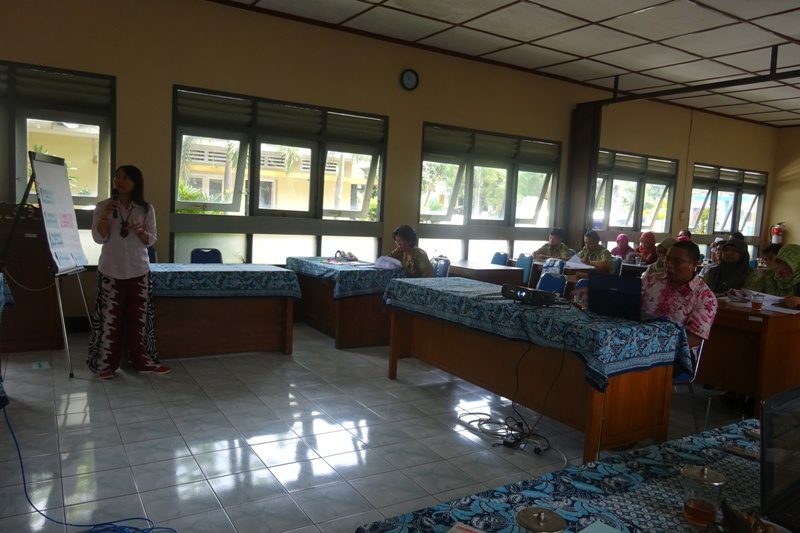
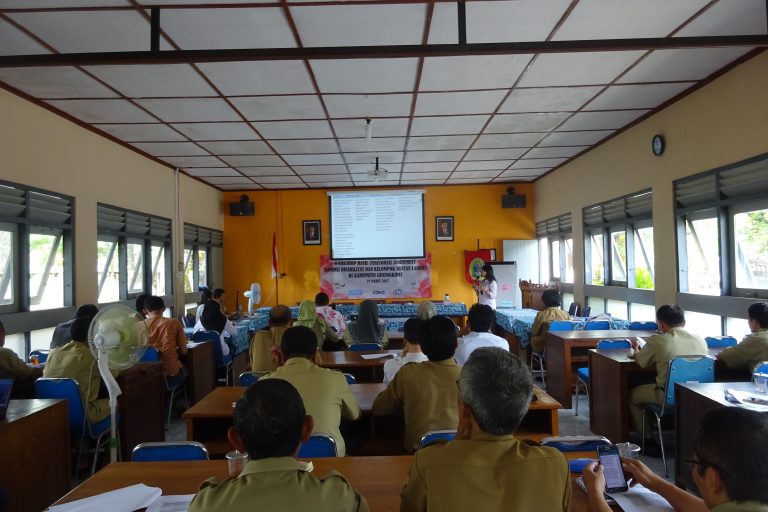
This was revealed in the event "Workshop on Territorial Assessment" Results of Disability Conditions and Other Vulnerable Groups in Gunungkidul Regency” held by Perkumpulan IDEA in collaboration with 2 disability NGOs, namely CIQAL and Handicap International, and Bappeda Gunungkidul, in the Meeting Room of the Public Works Department of Gunungkidul Regency on March 27, 2017. This workshop presented a number of Regional Government Organizations, Sub-district Governments, public service providers such as BPJS and Wonosari Hospital and village governments. This activity was carried out as a form of publication of the results of territorial mapping of the conditions of disability groups and other vulnerable groups in Gunungkidul Regency in the framework of the “Advocacy for Change” program organized by IDEA-HI-CIQAL. Territorial assessment was held last year in February 2016.
In her presentation, Suci Wulandari from Perkumpulan IDEA stated that the low level of participation was caused by the lack of synchronization between government regulations and current practices. In terms of regulations, a number of legal umbrellas at the regional level have been created to ensure the participation of disabled groups and other vulnerable groups in the regional development planning process. Gunungkidul Regional Regulation No. 18/2012 concerning Procedures for the Preparation of Regional Development Plans and the Implementation of Regional Development Planning Deliberations and Gunungkidul Regent Circular Letter No. 140/2967 of 2015 concerning Technical Instructions for the Preparation of the 2016 RKP, which explicitly states that vulnerable groups including disabled groups are involved as participants in deliberations at the village level, are two of the regulations initiated by the Gunungkidul Regency Government. Unfortunately, the government's affirmative action which is worthy of appreciation, is not directly proportional to what is mandated. The lack of information from the government at the supra-district level and the public in general about these pro-vulnerable group regulations is the main factor in the low participation.
The lack of participation is also caused by the negative perception of the general public towards vulnerable groups, especially the disabled, as parties who must be pitied and helped. As a result, they are only seen as groups that do not need to participate in society, especially in the development process. At the same time, violence against children, women and the disabled as vulnerable groups also continues to increase, from 35 cases recorded in 2014 to 44 cases in 2015.
Responding to the results of the territorial assesment , Priyanta Madya from Bappeda Gunungkidul appreciated and thanked Perkumpulan IDEA, CIQAL and Handicap International for the research conducted. "The results of this mapping can be used as input for the local government to make improvements in the future," said Priyatma. It must be acknowledged that the government has begun to take the initiative to involve vulnerable groups and disabilities in the regional budget planning process from the sub-district to the district level. However, he also regretted that a number of villages still view the participation of vulnerable groups, especially the disabled, as less important in development. "Vulnerable groups are only objects and this is what we are looking for a solution for," added Priyatma. (INM)
 English
 Bahasa Indonesia