

The first problem is uneven skills. Countries with abundant natural resources are generally poor in education and research and are too seduced by the ease of obtaining income from the sale of their natural resources. This is different from countries that live from the processing industry that continue to conduct research and utilize technology, thus giving rise to new discoveries and new commodities that sell well in the world.
There is a strange phenomenon where in the process of trade between processing countries and countries selling extractive industries it turns out that it is difficult to determine a fair point: what is the fair price for buying natural resources. Countries selling extractive industries never know how much and for what purpose the wealth is used, how much it is worth and how much it affects the world. On the other hand, countries processing extractive industries continue to hunt for mining and natural resources in various parts of the world, buying them at cheap prices and then processing them to make money.
The political economy system does not favor countries that live from the extractive industry. Indonesia, for example, is easily entangled in debt, cornered economically and politically, and ends up selling cheaply its extractive wealth to processing countries who then take a much larger margin than that taken from the raw price.
The second problem is Dutch Disease. Dutch Disease is a term that describes the economic collapse of a region after it no longer has natural resources to exploit. As is known, natural resources are non-renewable resources and will eventually run out. Mismanagement results in high dependence on this industry. Processing of natural resources becomes the highest economic mainstay (for example, Indonesia, which has oil and gas wealth, also has a very high dependence on oil and gas).
Other economic sectors also grew but their growth was a derivative of the extractive industry. Due to the unmanaged profits obtained from the extractive industry, the government did not realize that it should open or develop other economic sectors that are different from the extractive industry as a "reserve" or diversion when its natural resources run out.
Dutch Disease terjadi manakala pemerintah gagal ataupun terlambat membuka sektor lain sewaktu kekayaan alam habis. Padahal, pola konsumsi, pola hidup, dan ketergantungan masyarakat kepada SDA sudah demikian tinggi. Maka terjadilan pengangguran besar-besaran, kemiskinan mendadak, dan pukulan berantai karena kekosongan komoditas ekonomi dari industri ekstraktif.
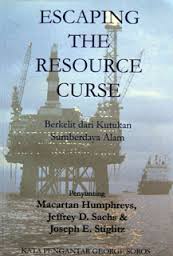
The following chapters in this book examine policy and decision making for anyone related to the issue of natural resource management, factors that must be considered, and how to manage social justice for all. All are packaged in an applicative manner, with the presentation of data and logical charts and not speaking in the context of an-sich discourse. (*)
To download the entire book, it can be obtained from the official Samdhana website. Click here.
 English
 Bahasa Indonesia